
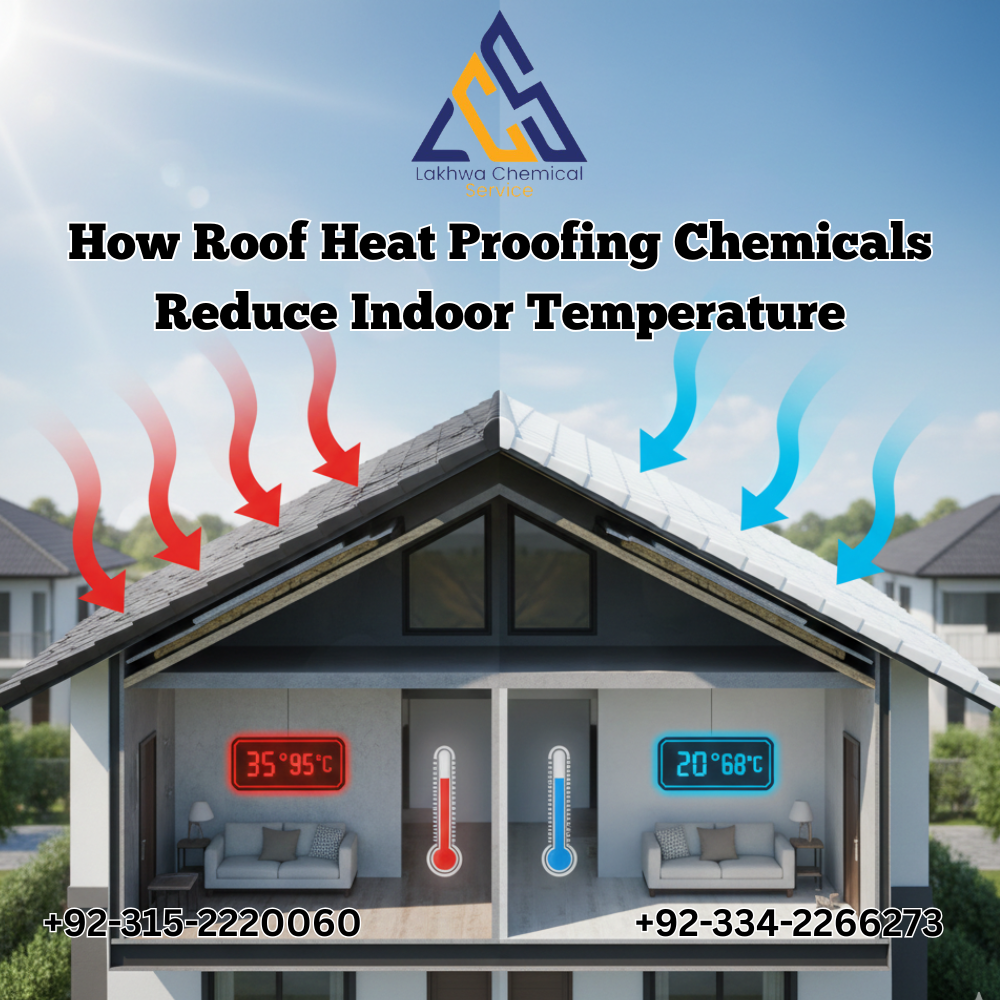
How Roof Heat Proofing Chemicals Reduce Indoor Temperature
When summer temperatures rise, the roof becomes the first line of defense between your home and the sun. In many buildings, especially in hot climates, the roof absorbs intense heat throughout the day and transfers it indoors. This is why upper floors often feel much warmer than the rest of the house.
Roof heat proofing chemicals are designed to reduce this heat transfer. When applied correctly, they can significantly lower indoor temperatures, improve comfort, and reduce air conditioning costs. In this article, we’ll break down how these chemicals work, the different types available, and why professional application from experts like Lakhwa Chemical Services makes a difference.
Why Roofs Get So Hot
Most roofs, particularly concrete slabs and metal sheets, absorb direct sunlight for hours. Dark and uncoated surfaces can reach temperatures of 60 to 80°C in peak summer. That heat doesn’t just stay on the surface. It gradually moves downward through the roof slab and radiates into rooms below.
There are three main ways heat enters a building through the roof:
-
Radiation – Direct sunlight heats the roof surface.
-
Conduction – Heat passes through the roofing material.
-
Convection – Warm air inside the building circulates and spreads the heat.
Without proper protection, this constant heat gain forces cooling systems to work harder, increasing electricity bills and reducing indoor comfort.
What Are Roof Heat Proofing Chemicals?
Roof heat proofing chemicals are specially formulated coatings applied to the roof surface. Their purpose is to:
-
Reflect sunlight
-
Reduce heat absorption
-
Improve insulation
-
Protect the roof structure
These coatings create a barrier between the sun’s rays and the building structure. Depending on the type of chemical used, they can reflect solar radiation, block ultraviolet rays, and even provide waterproofing benefits.
Read More:
Can waterproofing chemicals in Karachi used on every material?
Why heat insulation for roof in Pakistan is expensive?
How Heat Proofing Chemicals Reduce Indoor Temperature
1. Solar Reflection
One of the main functions of heat proofing coatings is high solar reflectivity. Light-colored or specially engineered reflective coatings bounce a large portion of sunlight back into the atmosphere instead of absorbing it.
This significantly lowers the surface temperature of the roof. A cooler roof means less heat is conducted into the building.
2. Thermal Insulation
Some heat proofing chemicals contain insulating compounds such as ceramic microspheres. These tiny particles reduce the rate at which heat travels through the roof slab.
By slowing down heat transfer, indoor spaces stay cooler for longer periods, even during peak sunlight hours.
3. Reduced Heat Storage
Bare concrete absorbs heat during the day and releases it slowly at night. This is why buildings often remain hot even after sunset.
Heat proofing coatings reduce this heat storage effect. The roof stays cooler during the day and releases far less stored heat at night.
4. UV Protection
Ultraviolet rays not only increase heat but also damage roof surfaces over time. Specialized chemical coatings block UV radiation, protecting the roof from cracks and surface degradation.
A well-protected roof performs better in controlling temperature.
Types of Roof Heat Proofing Chemicals
Different roofs require different solutions. Here are the most commonly used heat proofing chemicals:
Acrylic Reflective Coatings
These water-based coatings are popular for residential buildings. They are easy to apply and provide good solar reflectivity. Acrylic coatings are also flexible, allowing them to handle temperature changes without cracking.
Elastomeric Coatings
Elastomeric coatings expand and contract with the roof surface. They provide excellent crack-bridging ability and strong reflective properties. These are ideal for concrete roofs exposed to extreme heat.
Polyurethane Coatings
Polyurethane-based chemicals offer durability and strong waterproofing along with heat resistance. They are often used in commercial or industrial buildings.
Bituminous Heat Reflective Coatings
These coatings combine traditional waterproofing with reflective technology. They are suitable for flat roofs and provide both heat reduction and moisture protection.
Professional service providers like Lakhwa Chemical Services assess the roof condition before recommending the right chemical system. The correct selection is critical for long-term performance.
Measurable Temperature Reduction
When properly applied, roof heat proofing chemicals can reduce roof surface temperature by 15 to 30°C. This can lead to indoor temperature drops of 4 to 8°C, depending on the building structure and ventilation.
While the exact results vary, most property owners notice:
-
Less reliance on air conditioning
-
Faster cooling in the evening
-
Improved comfort on upper floors
-
Lower monthly energy bills
Over time, the energy savings often offset the cost of application.
Energy Efficiency and Cost Savings
Air conditioners consume a large portion of electricity in hot climates. If the roof is constantly transferring heat inside, cooling systems must run longer to maintain comfort.
By reducing heat gain at the source, heat proofing chemicals lower the overall cooling load. This leads to:
-
Reduced electricity consumption
-
Extended lifespan of AC units
-
Lower maintenance costs
For commercial buildings and factories, the savings can be significant.
Protection Beyond Temperature Control
Heat proofing chemicals do more than reduce indoor temperature. They also provide additional benefits:
Waterproofing
Many heat reflective coatings double as waterproofing systems. They prevent rainwater seepage and protect against leaks.
Structural Protection
Constant heating and cooling cycles cause expansion and contraction in concrete. Over time, this leads to cracks. Heat proofing coatings minimize temperature extremes, reducing structural stress.
Increased Roof Lifespan
UV protection and moisture resistance extend the life of roofing materials. This reduces long-term repair costs.
Companies like Lakhwa Chemical Services often combine heat proofing with waterproofing treatments to deliver complete roof protection.
Application Process Matters
Even the best chemical will not perform properly if applied incorrectly. Proper surface preparation is critical. The roof must be:
-
Clean and dust-free
-
Free from loose particles
-
Repaired for cracks and damages
-
Completely dry before application
The coating is then applied in multiple layers using rollers, brushes, or spray machines. Thickness and curing time are carefully controlled to ensure maximum performance.
Professional applicators understand how weather conditions affect the process. Incorrect timing or improper mixing can reduce the coating’s effectiveness.
This is why working with experienced providers such as Lakhwa Chemical Services is important. Their technical expertise ensures proper product selection and correct installation.
Is Roof Heat Proofing Suitable for All Buildings?
Heat proofing chemicals are suitable for:
-
Residential homes
-
Apartment buildings
-
Commercial offices
-
Warehouses
-
Factories
-
Schools and hospitals
Flat concrete roofs benefit the most, but metal sheet roofs can also be treated with specialized coatings.
Before application, a site inspection helps determine:
-
Roof condition
-
Existing waterproofing layers
-
Exposure level to sunlight
-
Required coating thickness
Each building has different requirements, so a customized approach delivers better results.
Common Misconceptions
“White Paint Is Enough”
Ordinary white paint may reflect some sunlight, but it lacks insulation properties and durability. Heat proofing chemicals are engineered specifically for thermal performance and long-term protection.
“It Works Instantly”
While surface temperature reduction is immediate, noticeable indoor comfort improvement may take a few days as the building gradually cools down.
“It’s Only for Hot Regions”
Even in moderate climates, heat proofing improves comfort and reduces cooling costs during summer months.
Long-Term Value
Roof heat proofing is not just a seasonal fix. It is a long-term investment in building efficiency and structural health.
When professionally applied, high-quality coatings can last several years with minimal maintenance. Periodic inspection and minor touch-ups help maintain performance.
Compared to major structural insulation changes, chemical coatings are often more affordable and quicker to implement.
Roof heat proofing chemicals play a major role in controlling indoor temperature by reflecting sunlight, reducing heat absorption, and slowing down heat transfer. The result is a cooler, more comfortable indoor environment and lower energy costs.
The key to success lies in choosing the right chemical system and ensuring proper application. Professional service providers like Lakhwa Chemical Services bring technical knowledge, quality materials, and correct installation methods that maximize performance and durability.
Faqs
1. What is a roof heat proofing chemical?
It is a specially formulated coating applied to rooftops to reflect sunlight, reduce heat absorption, and improve indoor comfort.
2. How much temperature reduction can I expect?
Depending on the building and coating type, indoor temperatures can drop by 4 to 8°C after proper application.
3. Is heat proofing the same as waterproofing?
Not exactly. Some coatings offer both heat reflection and waterproofing, but they are designed for different primary purposes.
4. How long does roof heat proofing last?
High-quality coatings typically last 3 to 7 years, depending on weather exposure and maintenance.
5. Can heat proofing be applied to any roof?
Yes, it can be applied to concrete, metal sheet, and other common roof types after proper surface preparation.
6. Does it help reduce electricity bills?
Yes. By lowering indoor heat gain, it reduces the workload on air conditioners, leading to lower energy consumption.


Leave a Reply
Want to join the discussion?Feel free to contribute!