
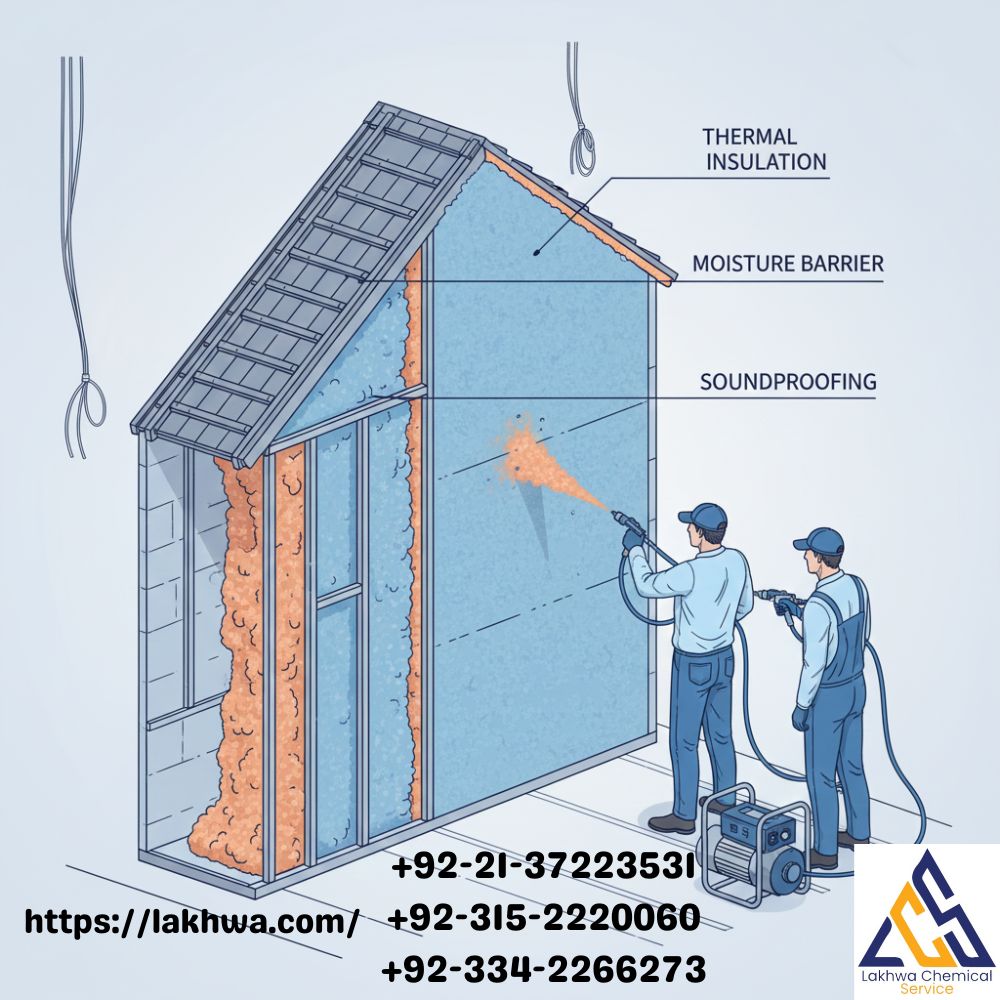
How Does Polyethylene Foam Spray Improve Insulation and Protection?
In Karachi’s climate—hot summers, high humidity, and heavy monsoon rains—building comfort and longevity depend on good insulation and protection. Traditional materials like thermopore sheets or basic plaster often fall short because they leave gaps that let heat and moisture in. That’s where insulation innovations like polyethylene foam spray become useful. In this post, we’ll explore how polyethylene foam spray works, why it’s gaining attention in construction and building projects, its benefits, and how professionals like Lakhwa Chemical Services can help make sure your project gets the results you expect.
What Is Polyethylene Foam Spray?
First, let’s clarify what polyethylene foam itself is and how “spray” versions come into play. Polyethylene foam is a closed‑cell foam material made from polyethylene plastic. It’s known for a lightweight structure with excellent shock absorption, insulation, and moisture resistance. These properties make it a common choice for packaging, soundproofing, and insulation in buildings.
While polyethylene foam is often seen as sheets or rolls, modern versions adapted for construction can come in sprayable forms or be paired with other spray materials that help it adhere more easily to walls, roofs, or HVAC systems. This means the material behaves like a coating rather than a rigid board, adapting to surfaces and filling gaps more thoroughly. Though spray methods are more established with polyurethane foams, polyethylene foam insulation materials have similar insulation benefits when applied correctly.
Why Insulation Matters in Karachi
Karachi’s climate places unique stresses on buildings:
-
High heat through much of the year means roofs and walls absorb a lot of solar energy.
-
Humidity and monsoon rains lead to water seepage and moisture problems.
-
Urban noise and dust make comfort and indoor air quality harder to maintain.
Without effective insulation, indoor spaces become hotter, forcing air conditioning systems to work harder and increasing energy bills. Moisture intrusion can also lead to mold, peeling paint, and structural deterioration.
This is where advanced insulation solutions, including polyethylene foam spray and professional application services, can make a real difference.
Read More:
Types of ways to find Bitumen Sheets Roof Waterproofing Price
How to Seal a concrete water tank in Karachi?
How Polyethylene Foam Spray Improves Insulation
1. Thermal Resistance and Energy Efficiency
Closed‑cell polyethylene foam has a low thermal conductivity, meaning it resists the transfer of heat. When spray insulation is applied over a surface, its structure slows heat from entering or escaping a building. This helps maintain consistent indoor temperatures and reduces reliance on cooling systems in Karachi’s hot months.
Energy loss through roofs and walls can account for a large portion of cooling costs in urban homes and commercial spaces. By improving thermal resistance, foam insulation helps lower electricity consumption and utility bills, which makes it a smart long‑term investment for residents and business owners alike.
2. Moisture and Water Resistance
One of the standout features of closed‑cell foam materials like polyethylene is their water resistance. In humid environments, moisture can travel through walls and ceilings, weakening structures and promoting mold growth. Polyethylene foam’s closed‑cell nature impedes moisture penetration, helping maintain the health of building materials and indoor environments.
This property is especially valuable in a city like Karachi, where monsoon rainwater can quickly find its way through small cracks or porous surfaces.
3. Air Sealing and Gap Filling
Spray insulation methods allow material to expand and fill gaps, cracks, and irregular surfaces more completely than rigid boards or batts. By creating a continuous insulation layer without seams, foam reduces air infiltration and drafts. This uninterrupted barrier not only improves thermal performance but also prevents dust, pollutants, and humidity from entering interior spaces.
4. Noise Reduction
Karachi’s urban settings are often noisy—traffic, construction, and crowded streets can all affect comfort indoors. Polyethylene foam’s structure helps absorb sound waves, providing a degree of sound insulation. While not a complete soundproofing solution on its own, when integrated into wall or ceiling systems it contributes to quieter interiors.
5. Durability and Long‑Term Performance
Closed‑cell foam materials resist compression and degradation over time. Unlike some traditional insulation types that can sag, settle, or rot, polyethylene foam maintains its insulating properties for many years. This makes it a cost‑effective long‑term solution when paired with good application practices and regular inspection.
Where Polyethylene Foam Spray Is Used
Roofs and Ceilings
Roof insulation is one of the most impactful applications because roofs receive direct sunlight and heat. Spray foam improves thermal resistance and helps lower surface temperatures, making indoor spaces cooler. It also seals small water entry points, protecting rooftops during monsoons.
Walls and Facades
Interior and exterior walls treated with foam insulation are less prone to temperature fluctuations and moisture problems. When properly installed, foam creates an air‑tight barrier that improves indoor comfort.
HVAC and Duct Systems
Insulating ductwork and around HVAC units can prevent energy losses and improve system efficiency. Foam fills gaps around ducts, reducing energy loss and helping systems maintain target temperatures more efficiently.
Piping and Mechanical Applications
In technical or industrial spaces, foam insulation helps protect pipes from temperature extremes and condensation build‑up.
Specialized Industrial and Commercial Uses
Stores, factories, and warehouse structures often benefit from foam insulation because it helps maintain consistent temperature control and reduces energy loads on large cooling systems.
Professional Application vs. DIY
While small spray insulation kits are available for minor sealing tasks, proper application for roof or wall insulation in larger buildings is a job for professionals. Achieving uniform coverage, correct thickness, and effective adhesion requires experience and the right equipment.
This is where experienced service providers like Lakhwa Chemical Services can help. They specialize in construction chemical solutions and professional insulation services across residential, commercial, and industrial projects in Karachi and beyond. Their expertise ensures that the foam is applied efficiently and meets performance expectations.
Why Choose Experts Like Lakhwa Chemical Services
Insulation work isn’t just about putting material on a surface. It requires:
-
Surface inspection and preparation
-
Choosing the correct type of foam and application thickness
-
Ensuring environmental safety and proper curing
-
Tackling humidity and weather considerations specific to Karachi
Lakhwa Chemical Services combines local knowledge with professional application skills to deliver solutions that improve comfort, energy efficiency, and long‑term protection. Their services span heat proofing, waterproofing, and other construction chemical needs tailored for Pakistan’s climate. LCS waterproofing Solutions
Maintenance and Long‑Term Care
Once polyethylene foam spray is applied, it typically requires little maintenance. However, periodic roof and wall inspections help catch issues like cracks or wear in protective topcoats. For exterior installations, adding a reflective or protective coating on top of the foam can enhance longevity by reducing UV exposure and weather wear.
Cost Considerations
While foam insulation may cost more up‑front than traditional materials, its long‑term savings on energy bills, reduced need for repairs due to moisture damage, and improved comfort make it a smart investment. Professional providers often offer consultations and detailed quotes based on project size and specific needs.
Final Thoughts
Polyethylene foam spray is a modern insulation and protection solution that delivers lasting benefits across thermal resistance, moisture control, air sealing, and noise reduction. In the challenging climatic conditions of Karachi, investing in quality insulation can make buildings more comfortable, resilient, and energy‑efficient.
Choosing the right application partner matters. Expertise from specialists like Lakhwa Chemical Services ensures the work is done properly and delivers the performance you expect over the long haul.
Faqs
-
What is polyethylene foam spray?
It’s a closed-cell foam applied as a spray that insulates, waterproofs, and seals gaps in buildings and industrial setups. -
How does it improve insulation?
Its low thermal conductivity slows heat transfer, keeping interiors cooler and reducing energy costs. -
Is it suitable for Karachi’s weather?
Yes, it resists heat, humidity, and monsoon water infiltration, making it ideal for local conditions. -
Can it be applied on roofs and walls?
Yes, it can be sprayed on roofs, ceilings, walls, ducts, and other surfaces for thermal and moisture protection. -
How long does polyethylene foam spray last?
When applied professionally, it can last 10+ years without losing insulating or protective properties. -
Where can I get it in Karachi?
Local suppliers and services like Lakhwa Chemical Services provide high-quality polyethylene foam spray solutions.


Leave a Reply
Want to join the discussion?Feel free to contribute!