
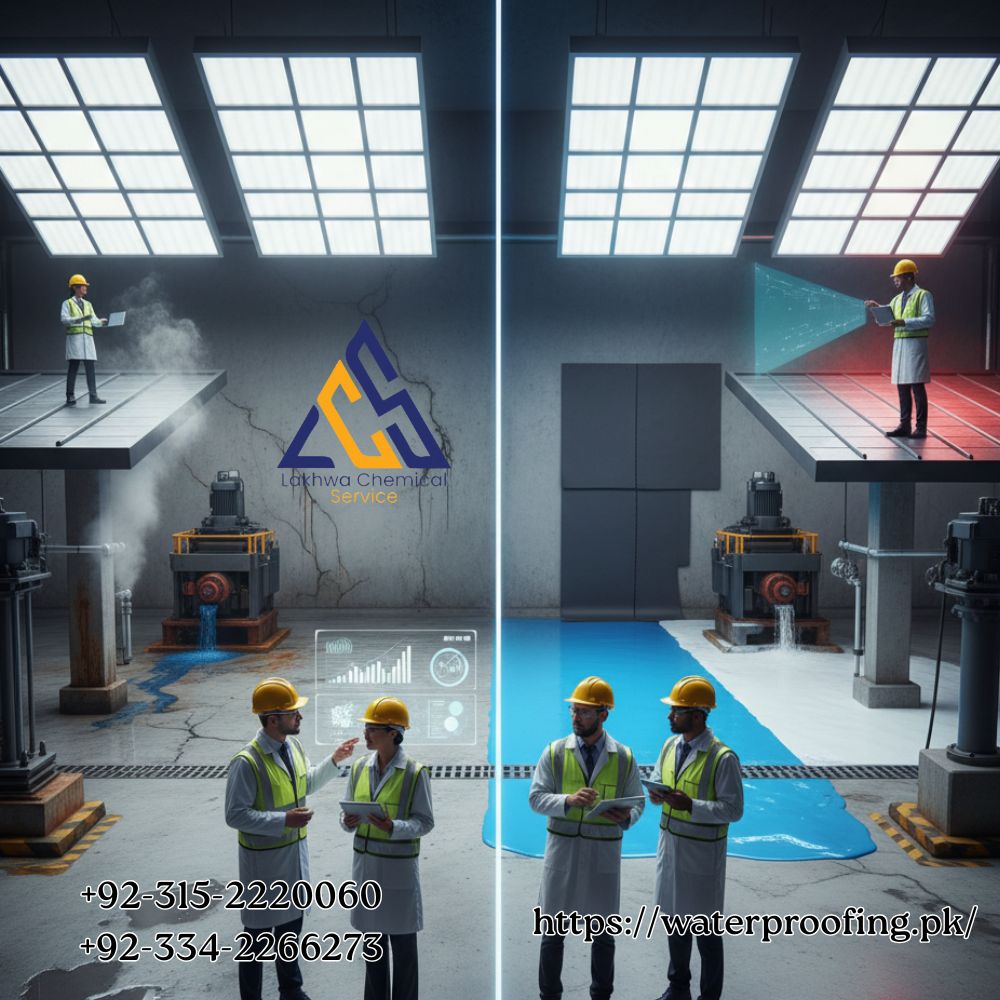
How Do You Choose the Right Industrial Waterproofing System?
Water damage is one of the most expensive and disruptive problems an industrial facility can face. Leaks, seepage, and moisture intrusion don’t just affect walls and roofs. Over time, they weaken structural elements, damage machinery, interrupt operations, and create safety risks for workers. That’s why industrial waterproofing is not a one-size-fits-all decision. Choosing the right system requires careful evaluation of the building, the environment, and the operational demands of the facility.
In this article, we’ll walk through the key factors that help determine the most effective industrial waterproofing solution and explain how experienced service providers like Lakhwa Chemical Services approach the process to ensure long-term protection.
Understanding the Purpose of Industrial Waterproofing
Industrial waterproofing is designed to protect structures from water ingress, chemical exposure, and environmental stress. Unlike residential waterproofing, industrial environments often involve higher loads, constant vibration, extreme temperatures, and exposure to chemicals or corrosive materials. This makes system selection far more critical.
The goal is not just to stop visible leaks but to create a durable barrier that maintains structural integrity, protects assets, and minimizes maintenance costs over time.
Assess the Type of Structure
The first step in choosing the right waterproofing system is understanding what type of structure needs protection. Different areas of an industrial facility face different challenges.
Common industrial waterproofing applications include:
-
Roofs and terraces
-
Basements and underground structures
-
Water tanks and reservoirs
-
Foundations and retaining walls
-
Expansion joints and movement areas
-
Chemical processing floors and containment zones
Each of these areas requires a different waterproofing approach. For example, a roof exposed to UV radiation and thermal movement needs a flexible, weather-resistant membrane, while a basement may require negative-side waterproofing to resist groundwater pressure.
Identify the Source and Type of Water Exposure
Not all water exposure is the same. A critical mistake many facilities make is choosing a system based on cost without understanding the nature of water intrusion.
Key questions to consider include:
-
Is the water exposure constant or occasional?
-
Is it rainwater, groundwater, or process water?
-
Is hydrostatic pressure involved?
-
Are chemicals or salts present in the water?
For example, structures exposed to groundwater under pressure require systems like crystalline waterproofing or injection grouting, while areas exposed to surface water may perform better with membranes or coatings. Lakhwa Chemical Services emphasizes thorough site inspections to accurately identify these conditions before recommending a solution.
Consider Environmental and Climatic Conditions
Environmental factors play a major role in system performance. Temperature fluctuations, humidity, UV exposure, and air pollution all affect how waterproofing materials behave over time.
In regions with high temperatures, materials must resist thermal expansion and contraction without cracking. In coastal or industrial pollution zones, resistance to chlorides, sulfates, and chemical fumes becomes essential.
A waterproofing system that performs well in one environment may fail prematurely in another. This is why material selection should always align with local climate and industrial exposure.
Evaluate Structural Movement and Load
Industrial structures are rarely static. Machinery vibration, heavy loads, thermal expansion, and foundation settlement all create movement. Waterproofing systems must be flexible enough to accommodate this without losing adhesion or cracking.
Rigid systems may be suitable for stable concrete structures, but flexible membranes, elastomeric coatings, or joint sealants are better suited for areas with frequent movement. Expansion joints, in particular, require specialized waterproofing solutions designed to stretch and recover repeatedly.
Ignoring structural movement is one of the fastest ways to compromise an otherwise well-installed system.
Choose the Right Waterproofing Material
There are several industrial waterproofing systems available, each with specific strengths and limitations. The right choice depends on application, exposure, and performance expectations.
Common industrial waterproofing materials include:
-
Cementitious waterproofing for internal areas and water tanks
-
Bituminous membranes for foundations and underground structures
-
Polyurethane and acrylic coatings for roofs and exposed surfaces
-
Crystalline waterproofing for concrete structures under hydrostatic pressure
-
Epoxy and chemical-resistant coatings for industrial floors and containment areas
-
Injection grouting systems for repairing active leaks and cracks
An experienced provider like Lakhwa Chemical Services evaluates compatibility between the substrate and the waterproofing material to avoid adhesion failures and chemical reactions.
Factor in Installation Quality and Expertise
Even the best waterproofing material will fail if installed incorrectly. Surface preparation, mixing ratios, curing time, and application thickness all directly affect system performance.
Industrial waterproofing is not a task for general contractors or untrained labor. It requires skilled technicians who understand material behavior, site conditions, and quality control standards.
Professional companies follow strict installation protocols, conduct adhesion tests when required, and ensure that detailing around joints, penetrations, and terminations is done correctly. This level of expertise significantly reduces the risk of future failures.
Think Long-Term, Not Short-Term Cost
Cost is always a consideration, but focusing only on initial price often leads to higher expenses later. A cheaper system that fails prematurely can result in production downtime, equipment damage, and repeated repair costs.
When evaluating waterproofing options, consider:
-
Expected service life
-
Maintenance requirements
-
Repair complexity
-
Warranty coverage
-
Impact of failure on operations
A slightly higher upfront investment in a proven system often delivers better value over the life of the facility. Lakhwa Chemical Services helps clients balance budget constraints with long-term performance to avoid costly compromises.
Ensure Compatibility With Existing Systems
Many industrial facilities already have some form of waterproofing in place. Before installing a new system, it’s important to assess compatibility with existing materials.
Incompatible systems can lead to delamination, blistering, or chemical breakdown. In some cases, complete removal may be necessary, while in others, overlay systems can be used safely.
A proper evaluation prevents layering mistakes that reduce effectiveness instead of improving it.
Compliance and Safety Considerations
Industrial waterproofing systems must meet safety, environmental, and regulatory standards. This includes resistance to fire, chemicals, and slip hazards, as well as compliance with local building codes.
Certain facilities, such as pharmaceutical plants, food processing units, or chemical factories, have strict requirements for hygiene and chemical resistance. Choosing a system that meets these standards is non-negotiable.
Professional waterproofing providers stay updated on compliance requirements and ensure that materials and methods align with industry regulations.
Work With a Trusted Waterproofing Partner
Choosing the right industrial waterproofing system is not just about materials. It’s about working with a partner who understands industrial challenges and provides end-to-end solutions.
Lakhwa Chemical Services brings technical expertise, site-specific analysis, and proven waterproofing solutions tailored to industrial environments. Their approach focuses on identifying root causes, recommending appropriate systems, and delivering quality workmanship that stands up to demanding conditions.
A reliable partner also provides post-installation support, inspections, and guidance on maintenance to extend system life.
Final Thoughts
Industrial waterproofing is a critical investment in the durability, safety, and efficiency of any facility. The right system protects not just the structure but also operations, equipment, and people.
By carefully assessing the structure, water exposure, environment, and long-term requirements, and by working with experienced professionals like Lakhwa Chemical Services, industrial operators can avoid common mistakes and ensure lasting protection.
Faqs
-
What is industrial waterproofing?
Industrial waterproofing involves specialized systems that prevent water penetration in industrial structures exposed to heavy use, chemicals, and harsh conditions. -
Why is industrial waterproofing important?
It protects structural integrity, prevents equipment damage, reduces maintenance costs, and avoids production downtime caused by leaks or moisture. -
Which areas require industrial waterproofing?
Common areas include roofs, basements, foundations, water tanks, expansion joints, and chemical processing floors. -
What types of industrial waterproofing systems are used?
Systems include membrane waterproofing, cementitious coatings, polyurethane coatings, crystalline systems, and injection grouting. -
How long does industrial waterproofing last?
With proper material selection and installation, industrial waterproofing systems can last 10 to 25 years or more. -
How do I choose the right waterproofing solution?
The right solution depends on structure type, water exposure, environmental conditions, and professional assessment by experts like Lakhwa Chemical Services.


Leave a Reply
Want to join the discussion?Feel free to contribute!