
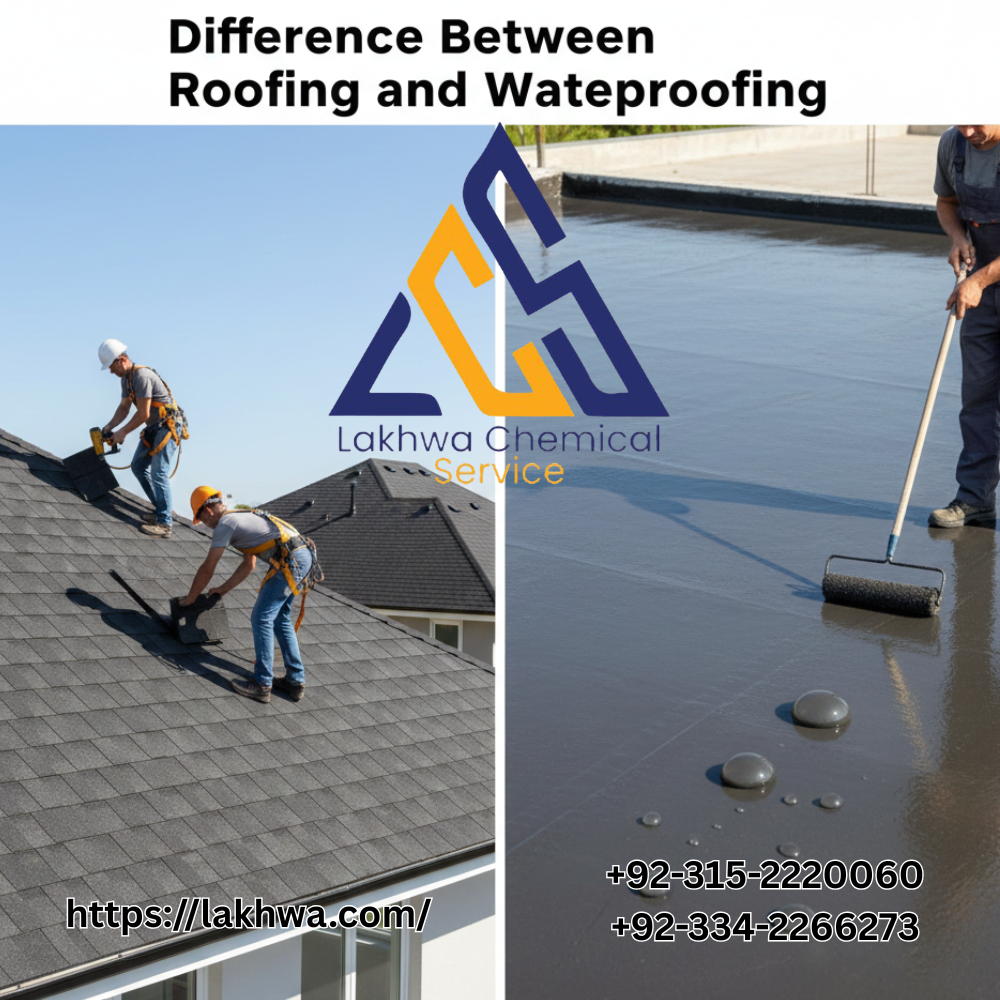
What Is the Difference Between Roofing and Waterproofing?
If you own a home or commercial building in Karachi, you’ve probably heard contractors talk about roofing and waterproofing as if they’re the same thing. They’re not. While both protect your property from weather damage, they serve different purposes and solve different problems.
Understanding the difference is important, especially in a city like Karachi where intense heat, coastal humidity, monsoon rains, and poor drainage can seriously damage buildings. In this guide, we’ll break down what roofing and waterproofing really mean, how they work together, and why both are essential for long-term protection.
What Is Roofing?
Roofing refers to the outermost covering of a building. It is the structural system that protects the interior from sun, rain, wind, and debris. The roof is the first line of defense against weather conditions.
In Karachi, most residential properties have RCC (reinforced cement concrete) flat roofs. Commercial buildings may use metal sheets, bitumen membranes, or tile systems depending on design and budget.
The main functions of roofing include:
-
Providing structural protection
-
Supporting insulation systems
-
Allowing proper water drainage
-
Shielding against direct sunlight and heat
A roof is built using materials like concrete, metal sheets, tiles, or modified bitumen membranes. But here’s the important part: roofing alone does not guarantee that water will never seep inside.
Concrete roofs in Karachi are especially prone to cracks due to heat expansion and contraction. Once cracks appear, water can slowly penetrate the surface and cause internal damage.
That’s where waterproofing comes in.
What Is Waterproofing?
Waterproofing is the process of applying protective materials to prevent water from penetrating a surface. It acts as a barrier between your structure and moisture.
Unlike roofing, which is structural, waterproofing is a protective layer added on top of or within surfaces like roofs, bathrooms, basements, and water tanks.
In Karachi, waterproofing is critical because:
-
Monsoon rains can cause standing water on flat roofs
-
High humidity increases moisture absorption
-
Poor drainage systems worsen leakage problems
-
Coastal air can accelerate material deterioration
Waterproofing materials include:
-
Liquid waterproofing membranes
-
Bituminous coatings
-
Polyurethane coatings
-
Cementitious waterproofing
-
Torch-applied membranes
When applied correctly, waterproofing prevents water seepage, mold growth, ceiling stains, paint damage, and structural weakening.
The Core Difference Between Roofing and Waterproofing
The simplest way to understand the difference is this:
-
Roofing is the structure.
-
Waterproofing is the protection layer that stops water from entering that structure.
Think of roofing as the body of your car and waterproofing as the paint seal that protects it from rust. Both are necessary, but they serve different roles.
A strong roof without waterproofing can still leak. And waterproofing without a solid roof structure will not solve structural weaknesses.
In Karachi, many homeowners mistakenly believe that a newly constructed concrete roof does not require waterproofing. This assumption often leads to leakage within a few years.
Why Roofing Alone Is Not Enough in Karachi
Karachi’s climate creates unique challenges:
-
Extreme Heat
Summer temperatures often exceed 40°C. Heat causes roof surfaces to expand and contract, leading to hairline cracks. -
Heavy Monsoon Rains
Flat roofs tend to accumulate water. Without proper waterproofing, standing water slowly seeps into the concrete. -
Humidity and Coastal Air
Moisture-laden air weakens surfaces over time and increases the risk of dampness. -
Construction Quality Variations
Not all buildings are constructed with high-grade materials or proper slope design, which makes waterproofing even more essential.
Because of these factors, waterproofing is not optional in Karachi. It is a preventive measure that saves thousands of rupees in future repairs.
Common Problems Caused by Poor Waterproofing
If roofing is installed properly but waterproofing is ignored, you may experience:
-
Ceiling stains and damp patches
-
Peeling paint and bubbling plaster
-
Mold and fungus growth
-
Electrical wiring damage
-
Structural weakening of concrete
-
Rusting of reinforcement bars
These problems often start small but become expensive if not treated early.
How Roofing and Waterproofing Work Together
For long-term protection, roofing and waterproofing must function as a system.
Here’s how they complement each other:
-
The roof provides structural support.
-
Waterproofing seals cracks and blocks moisture.
-
Proper slope design ensures water flows toward drains.
-
Heat-resistant coatings reduce temperature impact.
When installed professionally, this combination extends the life of your property by 10 to 20 years.
When Should You Consider Waterproofing?
You should consider waterproofing if:
-
Your building is newly constructed
-
You see minor cracks on the roof
-
Water pools on your roof after rain
-
You notice ceiling dampness
-
Your property is over 5 years old without prior treatment
Preventive waterproofing is always cheaper than corrective repairs.
Choosing the Right Solution in Karachi
Waterproofing is not a one-size-fits-all service. The solution depends on:
-
Roof condition
-
Building age
-
Exposure to sunlight
-
Drainage system
-
Budget
For example:
-
Cementitious coatings work well for small residential roofs.
-
Polyurethane membranes are better for heavy exposure areas.
-
Torch-applied membranes are ideal for commercial buildings.
Professional inspection is essential before choosing a system.
Why Professional Services Matter
Improper application can make waterproofing ineffective. Surface preparation, crack filling, primer application, and correct thickness all matter.
This is why many property owners in Karachi rely on experienced companies like Lakhwa Chemical Services. With years of expertise in roofing and waterproofing solutions, they understand the local climate challenges and offer treatments designed specifically for Karachi’s environment.
From residential roof protection to industrial waterproofing systems, Lakhwa Chemical Services focuses on long-term durability rather than short-term fixes. Their approach typically includes site inspection, surface preparation, high-quality material application, and post-treatment support.
Professional work ensures:
-
Proper crack repair
-
Correct membrane thickness
-
Long-lasting adhesion
-
Reduced maintenance costs
Cutting corners often leads to repeat leakage within one or two seasons.
Cost Difference Between Roofing and Waterproofing
Roofing is a major construction expense because it involves structural materials and labor.
Waterproofing, on the other hand, is a fraction of that cost but plays a critical protective role.
In Karachi:
-
Reconstructing a damaged roof can cost several lakhs.
-
Preventive waterproofing costs much less and extends roof life significantly.
Spending on waterproofing is an investment, not an extra expense.
Maintenance Tips for Karachi Property Owners
To keep your roof in good condition:
-
Inspect your roof before and after monsoon season.
-
Clear drainage outlets regularly.
-
Repair small cracks immediately.
-
Avoid water tank overflow on the roof.
-
Schedule professional inspection every few years.
Routine care can prevent major structural damage.
Roofing and waterproofing are closely connected but completely different in purpose. Roofing forms the structure that protects your building, while waterproofing ensures that water does not penetrate and weaken that structure.
In Karachi’s harsh climate, relying on roofing alone is risky. Heat, humidity, and heavy rainfall demand an added layer of protection.
If you want to protect your home or commercial property for the long term, combining strong roofing with professional waterproofing is the smart approach. Companies like Lakhwa Chemical Services provide specialized solutions tailored to Karachi’s weather conditions, helping property owners avoid costly repairs and extend the life of their buildings.
Faqs
1. What is the main difference between roofing and waterproofing?
Roofing is the structural covering of a building, while waterproofing is a protective layer that prevents water from seeping into the structure.
2. Is waterproofing necessary for concrete roofs?
Yes. Concrete roofs can develop cracks over time, allowing water to penetrate. Waterproofing helps seal these cracks and prevent leakage.
3. How long does roof waterproofing last?
Depending on the material and application quality, waterproofing can last between 5 to 15 years with proper maintenance.
4. What are the signs that my roof needs waterproofing?
Common signs include ceiling damp patches, peeling paint, mold growth, and water pooling on the roof after rain.
5. Can waterproofing reduce indoor heat?
Some waterproofing systems include heat-reflective coatings that help reduce roof temperature and improve indoor comfort.
6. How often should I inspect my roof?
It’s recommended to inspect your roof at least once a year and before the monsoon season to prevent major damage.


Leave a Reply
Want to join the discussion?Feel free to contribute!