
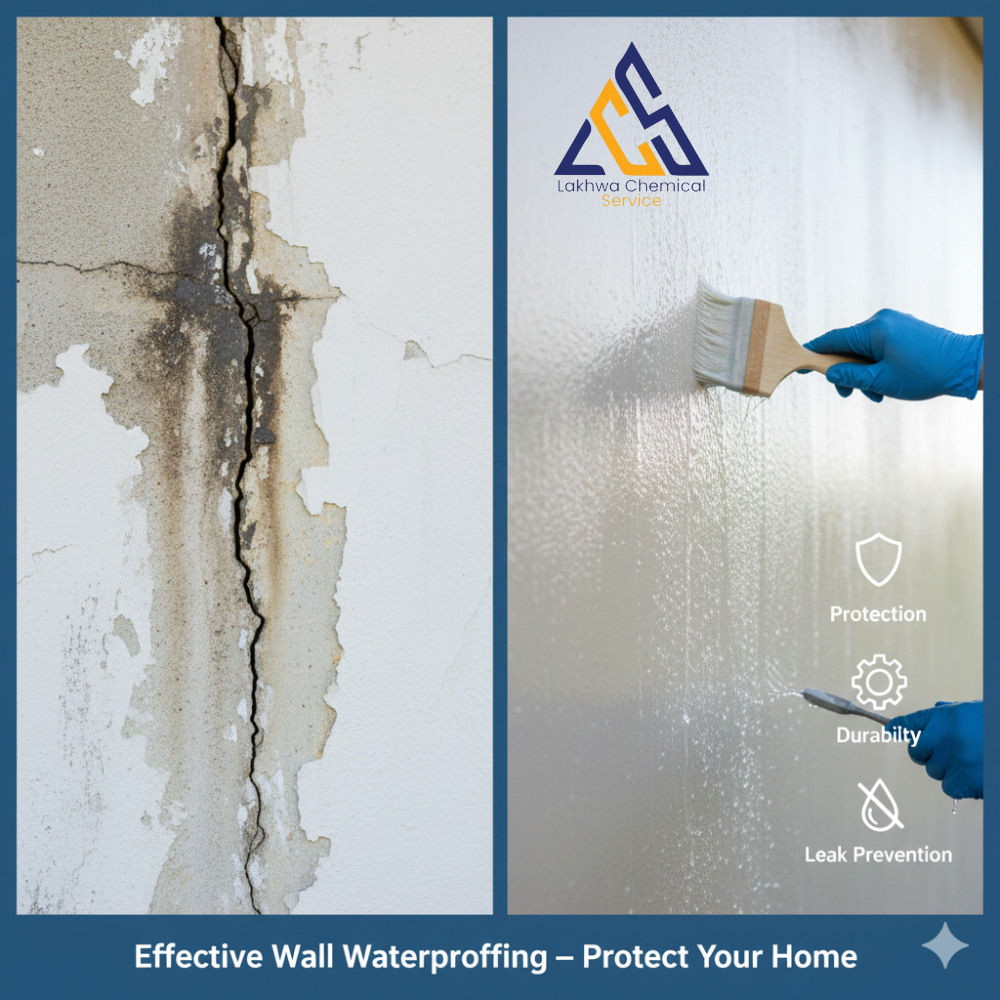
Effective Water proofing for Walls: How to Protect Your Home
Walls are one of the most important structural elements of your home. When water manages to seep into or through them, the consequences can be serious: peeling paint, damp patches, mold and mildew growth, structural weakening, and even health risks for residents. In climates with heavy rainfall, high humidity or coastal moisture — like Karachi or other parts of Pakistan — waterproofing your walls isn’t optional. It’s essential.
Waterproofing helps walls resist water ingress, stops seepage, and prolongs the life of the building. Done properly, it creates a barrier that keeps interiors dry, prevents deterioration, and avoids recurring repair costs.
That’s where wall‑waterproofing methods and reliable chemical solutions enter the picture. Lakhwa Chemicals is one of the providers offering products designed to tackle damp walls and seepage issues — potentially without large‑scale renovation or demolition.
Common Methods for Waterproofing Walls
There are several approaches to waterproofing walls, depending on the wall material (concrete, brick, plaster), whether the wall is internal or external, and the level of exposure to water or moisture. Here are the main techniques widely used in construction:
Cementitious / Cement‑based Waterproofing
This involves mixing a waterproofing powder or additive with cement or mortar and applying it as a slurry or coating onto walls. Once it dries, it forms a rigid, water‑resistant barrier that bonds directly to the wall surface.
-
It’s easy to apply — by brush, roller, trowel, or spray.
-
It’s well‑suited to concrete or masonry surfaces, basements, tank walls, bathrooms — any area prone to dampness or water pressure.
-
It bonds strongly with masonry/concrete, ensuring the waterproofing becomes effectively part of the structure.
Because of these qualities, this method remains a popular choice for wall waterproofing where structural integrity and water resistance are priorities.
Liquid Membranes & Flexible Coatings
These are paint‑like or rubber‑like coatings applied to walls, forming a continuous, flexible waterproof layer. They are especially useful when walls or structures may shift or expand/contract with temperature changes.
Flexible coatings address one common weakness of cementitious systems — their rigidity and risk of cracking if the building moves. For older walls, or walls with small cracks or slight movement, these coatings can provide better long‑term waterproofing.
Sealants & Water‑Repellent Treatments
For walls that are already finished or painted, or for retro‑fitting waterproofing without heavy works, sealants or water‑repellent chemicals penetrate into the pores of plaster, concrete, or brick and render them less absorbent. These solutions can be a good choice for interior walls, older homes, or places where you want minimal disruption.
Sealants can help prevent dampness, reduce the chance of mold, and protect internal walls — but their effectiveness depends heavily on surface condition, application quality, and the wall’s exposure to rain or moisture.
Mixed / Composite Solutions
Sometimes, the best results come from combining techniques: e.g. cementitious waterproofing plus a flexible membrane, or a water‑repellent sealant over a treated wall. This layered approach can address different weaknesses — rigidity, cracks, UV exposure — and give more durable protection.
Benefits of Waterproofing Walls
Whether you choose cementitious, membrane‑based, or sealant methods, a properly treated wall brings many advantages:
-
Prevents water seepage and dampness — keeps interiors dry, avoids leaks through walls.
-
Protects structural integrity — water infiltration can corrode reinforcement, degrade masonry, or weaken mortar; waterproofing shields walls from those risks.
-
Prevents mold, mildew, and damp‑related health issues — damp walls encourage mold growth; waterproofing stops moisture build‑up that fosters that.
-
Reduces maintenance and repair costs — by preventing recurring leaks or damp-related damage, waterproofing can save money over the long term.
-
Increases property value and durability — a well‑protected house stands the test of time better and commands higher value.
Challenges & What to Watch Out For
Waterproofing walls isn’t magic. If done poorly, or using wrong methods, it can fail or even worsen problems. Key pitfalls:
-
Poor surface preparation — dust, oil, loose plaster, damp concrete or old paint can prevent proper adhesion of coatings or sealants.
-
Inappropriate method for wall type — rigid cementitious coatings may crack on walls with movement or temperature‑driven expansion/contraction; flexible coatings might be needed instead.
-
Insufficient application — too thin, one coat only, skipped curing — which can lead to weak, incomplete protection and eventual leaks.
-
Environmental stress — heat, humidity, UV exposure can degrade some coatings over time. In humid or coastal areas, curing and maintenance become more critical.
-
Neglecting drainage & external factors — waterproofing is one part; proper drainage, roof overhangs, sealing of joints/cracks, maintenance of external walls all matter.
How Lakhwa Chemicals Fits In
Lakhwa Chemicals offers waterproofing solutions aimed at preventing wall seepage and dampness — especially useful when you want to avoid heavy civil work or breaking existing plaster. Their chemical-based treatments are designed to treat wet or damp walls with a simple application, making them an accessible option for many homeowners.
According to sources, using waterproofing chemicals can be a lower-cost, less invasive alternative to structural waterproofing, as they don’t require breaking walls or heavy renovation — ideal for older homes or repairs.
That said, success depends on proper application (clean, dry surfaces, correct dosage, curing time) and matching the right product to the wall’s condition and exposure.
For many houses — especially in humid or rainy areas — Lakhwa Chemicals’ solutions can offer an effective, budget-conscious way to control dampness and water seepage without major construction work.
What to Consider Before Waterproofing Your Walls
If you’re thinking of waterproofing walls (new build or existing), here’s a checklist to make it effective:
-
Assess wall type and exposure — Is wall concrete, brick, plastered? Internal or external? Exposed to rain, underground moisture, splash zones?
-
Prepare the surface thoroughly — clean, dry, remove dust, oil, loose paint or plaster. Any cracks should be sealed first.
-
Choose a waterproofing method suited to the wall and conditions — cementitious coatings for stable masonry, flexible membranes or sealants for walls that shift or are exposed to sun/heat.
-
Apply correctly, with required thickness and coatings — often at least 2 coats for best results; follow product instructions.
-
Allow proper curing and drying time — avoid rushing; improper curing undermines effectiveness.
-
Ensure good drainage and manage water sources around the building — waterproofing alone can’t handle water pooling against walls.
-
Inspect and maintain over time — check for cracks, peeling, wear; reapply or repair where necessary.
Conclusion
Water proofing for walls is not just a nice finishing touch — it’s a critical investment in your home’s durability and livability. In places with heavy rain, humidity, or coastal exposure, untreated walls will sooner or later show damage: damp patches, mold, peeling paint, structural decay.
By choosing a suitable method — whether a cementitious coating, a flexible membrane, or a water‑repellent chemical — and applying it properly, you can safeguard walls effectively. Companies like Lakhwa Chemicals make it easier for homeowners by offering chemicals and treatments that don’t require major structural work, especially useful for existing homes battling dampness or water seepage.
Frequently Ask Questions
-
What is wall waterproofing?
It’s the process of applying coatings, membranes, or chemicals to walls to prevent water penetration and dampness. -
Why is waterproofing walls important?
It prevents damp walls, mold growth, structural damage, and peeling paint, especially in rainy or humid climates. -
Which areas need wall waterproofing?
External walls, basements, bathrooms, kitchens, terraces, and retaining walls are common areas prone to water damage. -
What types of wall waterproofing are available?
Cementitious coatings, liquid membranes, flexible coatings, and water-repellent chemicals are popular methods. -
Can I waterproof walls myself?
Minor DIY treatments are possible, but professional application ensures proper coverage, curing, and long-term effectiveness. -
How long does wall waterproofing last?
Depending on the method, materials, and maintenance, waterproofing can last 8–15 years or more.


Leave a Reply
Want to join the discussion?Feel free to contribute!