What Is Ceramic Heat Coating?
Ceramic heat coating is an advanced thermal insulation product that incorporates microscopic ceramic or silica microspheres suspended in a liquid binder. When applied to a roof, wall, or any building surface, these microspheres create millions of tiny air pockets that act as thermal barriers — dramatically slowing the transfer of heat into the structure beneath.
Originally developed for aerospace and industrial applications, ceramic insulation technology has been refined into user-friendly coating products that can be brush-applied, rolled, or sprayed onto virtually any surface. In a city like Karachi, where rooftops can reach surface temperatures of 70–80°C during peak summer months, ceramic heat coatings deliver measurable, lasting protection that conventional cool-roof paints simply cannot match.
How the Technology Works
The Role of Ceramic Microspheres
Each ceramic microsphere in the coating is a hollow, vacuum-sealed sphere approximately 30–100 microns in diameter. Because heat transfer through air is far less efficient than through solid materials, these millions of trapped air pockets create a continuous thermal break across the entire coated surface. The coating simultaneously reflects incoming solar radiation and resists conductive heat transfer — addressing the problem from two directions at once.
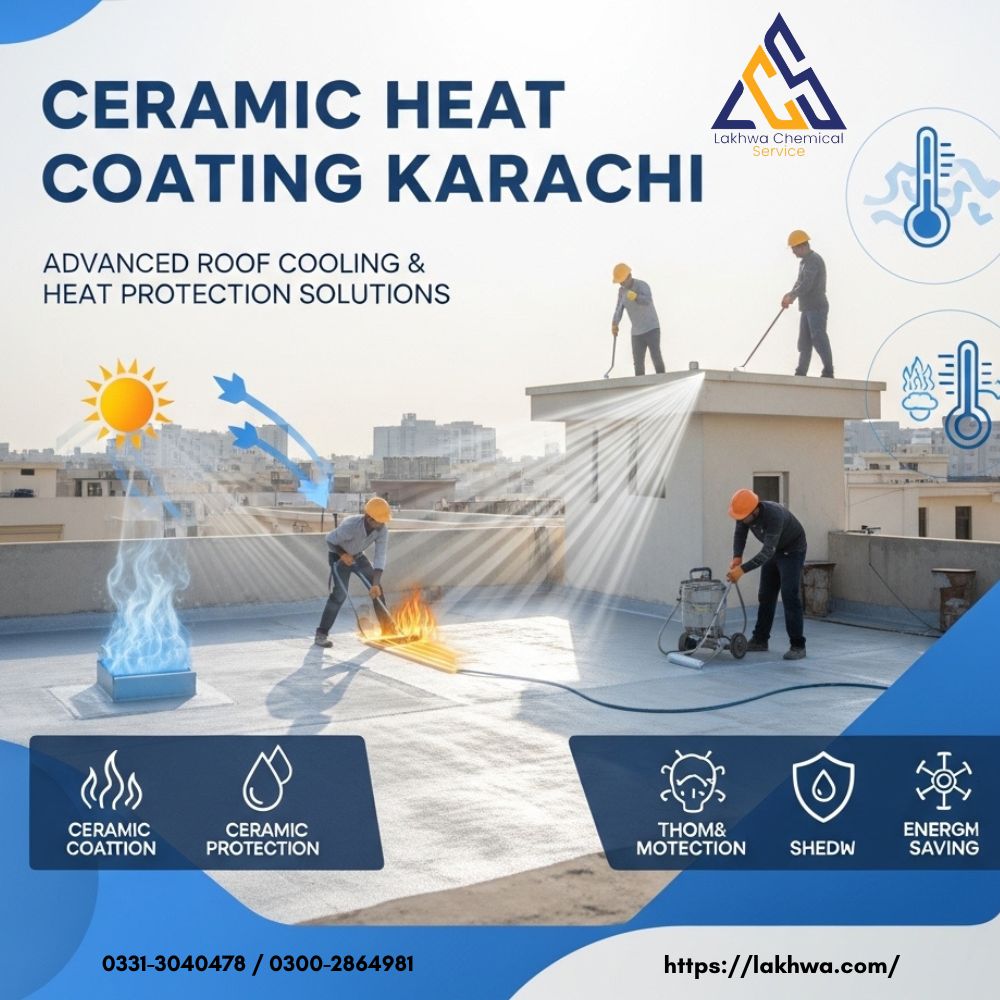
A single coat of quality ceramic heat coating — just 0.5 to 1mm thick — can deliver the thermal resistance equivalent of several inches of conventional insulation material.
Why Ceramic Coating Is Ideal for Karachi’s Climate
Karachi presents a uniquely punishing combination of climate challenges. Intense solar radiation from April to September, followed by a monsoon season with heavy, sustained rainfall, puts enormous stress on building surfaces. Standard roof treatments address one problem or the other — ceramic heat coatings address both simultaneously.
Dual Protection: Heat and Water
High-quality ceramic coatings used in Karachi are formulated to be both thermally insulating and water-resistant. The elastomeric binders that hold the ceramic microspheres in place create a seamless, flexible membrane that bridges hairline cracks and repels water penetration. This means a single professional application from a qualified contractor can provide heat proofing and waterproofing together — saving both time and cost.
Problems ceramic coating directly solves in Karachi buildings
- Excessive indoor heat on upper floors during April–September
- High electricity bills from continuous air conditioning use
- Monsoon seepage through roof cracks and parapet walls
- Rapid deterioration of conventional roof paint under UV exposure
- Thermal cracking of concrete rooftops through expansion cycles
- Corrosion of reinforcement steel from water ingress
Ceramic Coating vs. Conventional Cool Roof Paint
| Feature | Conventional Cool Paint | Ceramic Heat Coating |
|---|---|---|
| Thermal insulation mechanism | Surface reflection only | Reflection + conduction resistance |
| Effective thickness | Thin film, 0.1–0.2mm | 0.5–1.5mm elastomeric layer |
| Waterproofing capability | Minimal | Integral water resistance |
| Lifespan in Karachi conditions | 3–4 years | 8–12 years |
| Flexibility over cracks | Brittle, cracks with surface | Elastomeric — bridges hairline cracks |
| Cost over 10 years | Higher (frequent reapplication) | Lower (one or two applications) |
Lakhwa Chemical Services: Karachi’s Ceramic Heat Coating Experts
What Makes Lakhwa’s Ceramic Coating Service Different
Pre-Application Surface Assessment
Before any coating is applied, Lakhwa’s technical team conducts a thorough inspection of the roof surface. Existing cracks are identified and treated with injection grouting or crack-filling compounds. Loose or deteriorated sections are removed and repaired. This preparation phase is critical — no ceramic coating performs well over a damaged substrate, and Lakhwa never skips it.
Professionally Sourced Ceramic Coating Products
Lakhwa Chemical Services works with internationally tested ceramic coating products that meet performance benchmarks for solar reflectance, thermal emittance, and elongation under stress. Every product used on-site is verified for quality — not simply purchased from a local hardware supplier and rebranded. This commitment to genuine materials is a key differentiator in a Karachi market where substandard products are widely sold under misleading labels.
Trained Application Teams
The performance of a ceramic coating depends as much on correct application as on the product itself. Lakhwa’s field teams are trained in proper surface priming, correct coating thickness (to avoid over-application that reduces flexibility), uniform coverage, and edge sealing — ensuring the finished coating performs as designed for its full expected lifespan.
Lakhwa Chemical Services provides a documented warranty on their ceramic heat coating applications — giving property owners genuine peace of mind, not just a verbal assurance.
The Application Process: Step by Step
Understanding how professional ceramic coating is applied helps building owners set realistic expectations and verify that their contractor is following best practices.
Standard Ceramic Heat Coating Application
- Surface inspection and crack mapping:The roof is inspected for structural cracks, delamination, water ponding areas, and previous coating failures. A treatment plan is drawn up before work begins.
- Surface preparation:Loose material, dust, and old paint are removed by grinding or pressure washing. The surface is allowed to dry completely before any coating is applied.
- Crack treatment and grouting:Active cracks are filled using polyurethane foam injection or cement-based crack fillers, depending on crack width and movement. Parapet walls and roof edges receive special attention.
- Primer coat application:A bonding primer is applied to ensure maximum adhesion of the ceramic coating to the concrete or masonry substrate below.
- First ceramic coat:The base ceramic insulation layer is applied at the specified thickness using rollers, brushes, or airless spray equipment. Coverage is checked for uniformity.
- Second and finishing coat:A second ceramic layer is applied after the first has cured, building the full insulation thickness and ensuring complete surface coverage with no pinholes or thin spots.
- Quality inspection and handover:The completed application is inspected for uniformity, edge sealing, and overall finish before being handed over with documentation.
Ideal Candidates for Ceramic Heat Coating in Karachi
Ceramic heat coating is versatile enough for almost any building type, but it delivers the highest return on investment in certain situations:
Residential Buildings
Top-floor apartments and independent homes in areas like North Nazimabad, Gulshan, Nazimabad, and Clifton experience the worst heat transmission through unprotected roofs. A ceramic coating treatment typically reduces indoor temperatures on the top floor by 5–8°C, making rooms liveable without continuous air conditioning — a significant benefit during Karachi’s frequent load-shedding periods.
Commercial and Industrial Properties
Large flat rooftops on factories, warehouses, and commercial plazas in SITE, Korangi, and Port Qasim areas absorb enormous amounts of heat, driving up cooling costs and creating uncomfortable working conditions. Ceramic coatings pay for themselves in reduced electricity bills within 2–3 years at industrial scale.
Buildings that benefit most from ceramic heat coating
- Residential buildings with top-floor heat complaints
- Factories and warehouses with large flat concrete rooftops
- Commercial plazas and shopping centres in direct sun exposure
- Schools, hospitals, and mosques requiring comfortable indoor temperatures
- Cold storage facilities needing supplementary thermal insulation
- Any roof already showing signs of heat cracking or water seepage
In Karachi’s climate, an investment in ceramic heat coating typically pays for itself within 2 to 3 years purely through electricity savings — making it one of the highest-return building improvement decisions a property owner can make.
Protect Your Karachi Property with Ceramic Heat Coating
Whether you own a residential apartment, a commercial building, or an industrial facility, ceramic heat coating from a trusted specialist like Lakhwa Chemical Services offers a proven, long-lasting solution to Karachi’s extreme heat and monsoon challenges.
Contact Lakhwa Chemical Services today for a professional site inspection and customised ceramic coating proposal.
Faqs
1. What is ceramic heat coating?
Ceramic heat coating is a reflective roof coating that uses ceramic particles to block heat and reduce roof temperature.
2. How much temperature reduction can I expect?
You can expect 5–12°C indoor temperature reduction depending on roof type and sun exposure.
3. How long does ceramic coating last?
Typically 3–6 years with proper application and maintenance.
4. Can it be applied on old roofs?
Yes. It works on old concrete roofs, metal sheets, and commercial buildings.
5. Is ceramic coating waterproof?
Yes. Most ceramic coatings also provide waterproofing and protect against leakage
6. Does ceramic coating reduce electricity bills?
Yes. By lowering indoor heat, AC usage drops and electricity costs decrease